


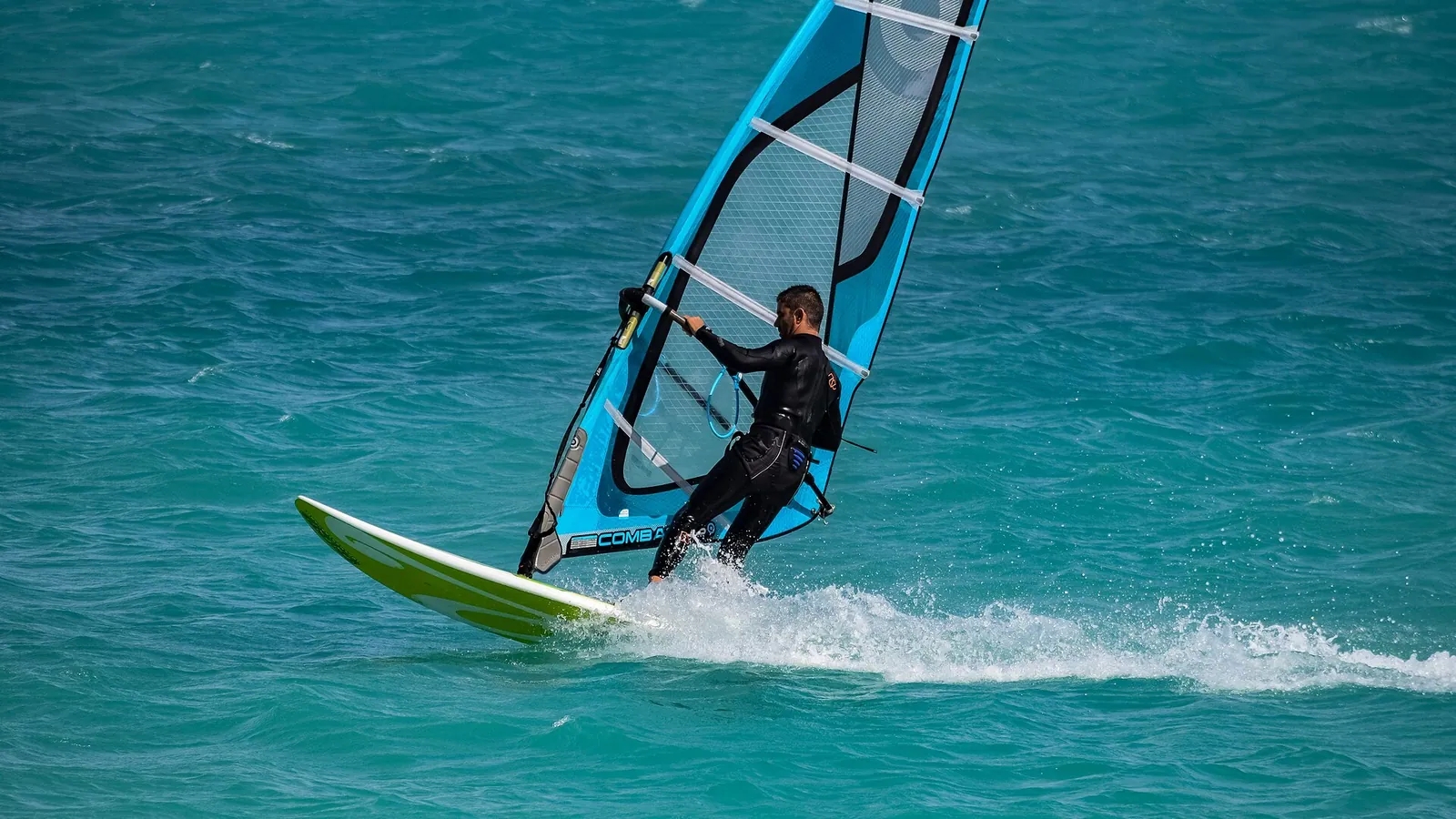
TL;DR: To get planing, most windsurfers want 15–22 knots. Beginners learn best in 8–14 kt. Wave and freestyle sailors go well above 25. The number you care about isn’t “is there wind?” — it’s “is there enough wind for my board and sail, right now?” Set an alarm at your spot so you stop guessing.
Windsurfing wind speed is really a question about planing. Below the planing threshold you’re schlogging — slow, upright, working hard. Above it, the board lifts onto the water and everything clicks. Where that threshold sits depends on your weight, your board, your sail and your skill. Here’s the breakdown, plus how to catch the window instead of missing it. Every number here is in knots — if you think in mph or km/h, keep our knots conversion chart handy.
Quick reference table
| Level / style | Sweet spot | Just learning | Too much |
|---|---|---|---|
| Beginner (big board, uphaul) | 8–12 kt | 6–8 kt | 16+ kt |
| Improver (getting into the harness) | 12–18 kt | 10 kt | 22+ kt |
| Intermediate (planing, footstraps) | 15–22 kt | 13 kt | 28+ kt |
| Freeride / bump & jump | 18–25 kt | — | 32+ kt |
| Freestyle | 18–28 kt | — | rider-dependent |
| Wave riding | 22–35+ kt | — | conditions-dependent |
| Slalom / speed | 22–35+ kt | — | conditions-dependent |
These are general ranges for an ~80 kg sailor. Lighter riders plane earlier; heavier riders need more. Your kit changes everything — a 7.5 m freeride sail planes in far less wind than a 4.2 m wave sail.
The planing threshold is the whole game
For most windsurfers, planing wind is the band where:
- You can get into the footstraps and stay there.
- The board releases onto the water surface.
- You’re hooked into the harness, not muscling the rig.
For an intermediate on a 100–120 L freeride board with a 6.5–7.5 m sail, that’s about 14–16 kt to get going, and 18–22 kt for the fun, fully-lit version. Drop below the threshold and you’re back to schlogging; go too far above your sail size and you’re overpowered and bouncing.
Match the wind to your sail, not the other way around
The reason two windsurfers disagree about “good wind” is sail size:
- 15 kt: 7.0–8.0 m sail, big freeride board. Plenty for an improver.
- 20 kt: 5.5–6.5 m. Classic freeride day for most people.
- 25 kt: 4.5–5.5 m. Powered-up, fun, getting physical.
- 30 kt+: 4.0 m and down. Wave/slalom territory.
If the forecast says 25 kt and all you own is a 7.5 m sail, that’s not a great day for you — it’s a great day for someone with a 4.7. Read the wind through the lens of your quiver.
Direction matters as much as speed
A 20 kt cross-onshore breeze is a dream launch — it brings you back to the beach if anything goes wrong. The same 20 kt blowing straight offshore is a serious hazard: a broken mast base or a tired arm and you’re being blown out to sea. Always check direction, and if your spot is offshore-prone, filter for it.
WindUp lets you say “alarm me when 16–24 kt AND wind is cross-onshore” — so you never get pulled to the beach for an unsafe offshore day.
Gusts decide whether you rig up or sit down
The average tells you if it’s worth going. The gust tells you whether to size down. A spot reading 18 kt average with 30 kt gusts is not an 18 kt day — it’s a rig-for-the-gusts day. As a rule, if gusts are running 8+ knots over the average, size down one sail and expect to work.
Catch the window instead of missing it
The frustration in windsurfing isn’t wind speed — it’s timing. Coastal wind builds and dies on its own schedule, often peaking for a two-hour thermal window that you’ll miss entirely if you’re checking the forecast on the wrong refresh.
The workflow that actually works:
- The night before: compare two forecast models (Windy makes this easy). When ECMWF and GFS agree on a planing day, plan it.
- The morning of: stop trusting forecasts. Watch the live station reading at your launch.
- Set a live alarm with your min wind, gust ceiling and direction filter — then put the phone down until it rings.
That’s exactly what WindUp is built for: a free alarm, no subscription, ringing even on Do Not Disturb. See the windsurfing setup page for the recommended thresholds. Riding something else? We’ve got the same breakdown for wing foiling and a wind speed chart for kite flying.
What wind do you want?
“Best wind for windsurfing” has no universal answer — it’s set by your weight, your board, your biggest and smallest sails, and your skill. The table above is a starting point; your own logbook is the real guide.
But the meta-rule is the same for everyone: stop guessing, start measuring. Set an alarm at your spot, rig for the gusts, and sail when it’s actually on.
FAQ
Common windsurfer questions about wind speed answered above and below. The honest take: figure out your planing threshold for your kit, set an alarm for it, and quit refreshing the forecast.