


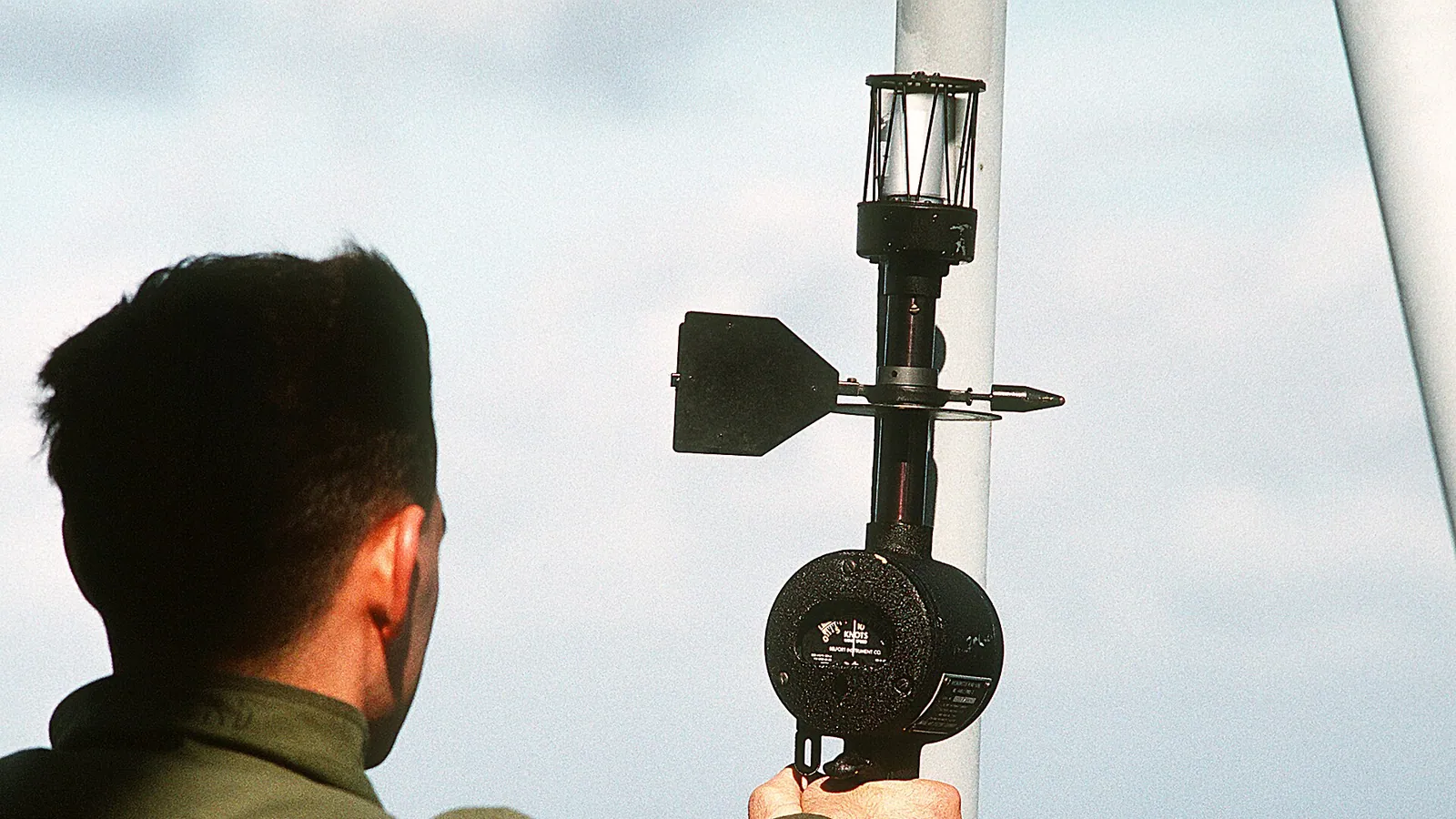
Short answer: 1 m/s = 2.23694 mph. To convert metres per second to mph, multiply by 2.24 — a little more than double. So 5 m/s is about 11 mph, and 10 m/s is roughly 22 mph. The chart below converts every common wind speed to mph, km/h and knots, with what each one feels like on the water.
If your forecast is in metres per second, it probably came from a European weather service, an aviation METAR, or a scientific source, because m/s is the official SI unit for speed. The rest of the world reads wind in mph, km/h or knots, so you end up converting. Here’s the clean way to do it.
What is a meter per second in mph?
A metre per second is exactly what it says: the distance in metres covered in one second. To get mph, you convert metres to miles and seconds to hours, which works out to a fixed factor: 1 m/s = 2.23694 mph. It’s a bit more than double, because a metre per second is a fairly brisk pace and an hour packs a lot of seconds.
For the other units you’ll meet: 1 m/s = 3.6 km/h (exactly) and 1 m/s = 1.94384 knots (almost double). So m/s sits below the mph and km/h figures and just under the doubled knots figure for the same wind.
The m/s to mph chart (with km/h and knots)
These are the wind speeds you’ll actually see on a forecast, converted from metres per second to mph, km/h and knots, with the Beaufort band and what each one means once you’re out in it.
| m/s | mph | km/h | Knots | Beaufort | What it feels like |
|---|---|---|---|---|---|
| 2 | 4.5 | 7.2 | 3.9 | F2 light breeze | Leaves rustle. Too light for most boards; light-wind foils only. |
| 4 | 8.9 | 14.4 | 7.8 | F3 gentle breeze | Flags extend, wavelets. Big kites and light-wind wings wake up. |
| 5 | 11.2 | 18.0 | 9.7 | F3 gentle breeze | Constant breeze. Light-wind foiling and big kites work. |
| 6 | 13.4 | 21.6 | 11.7 | F4 moderate breeze | Small branches sway, whitecaps. Solid all-round riding. |
| 8 | 17.9 | 28.8 | 15.6 | F5 fresh breeze | Whitecaps everywhere. Powered up on mid-size gear. |
| 10 | 22.4 | 36.0 | 19.4 | F5-6 | Small trees sway. Strong side of fun; size down. |
| 12 | 26.8 | 43.2 | 23.3 | F6 strong breeze | Large branches move, spray. Small kites, experienced hands. |
| 15 | 33.6 | 54.0 | 29.2 | F7 near gale | Whole trees in motion. Experts only, time to depower. |
| 20 | 44.7 | 72.0 | 38.9 | F8 gale | Hard to walk into. Beyond almost everyone’s limit. |
Numbers rounded to one decimal. Source: standard SI conversions (1 m/s = 2.23694 mph = 3.6 km/h) and the Beaufort wind scale bands from the US National Weather Service. For the force-by-force breakdown, see our Beaufort scale in knots.
Quick answers: how fast is X m/s?
The exact conversions for the wind speeds people ask about most. Multiply m/s by 2.23694 for mph.
- 4 m/s = 8.9 mph. Gentle breeze; big kites and light-wind foiling.
- 5 m/s = 11.2 mph. Constant gentle breeze, the light end of rideable.
- 6 m/s = 13.4 mph. Moderate breeze; solid all-round riding.
- 8 m/s = 17.9 mph. Fresh breeze, Force 5, the powered-up sweet spot.
- 10 m/s = 22.4 mph. Strong side of fun; time to size down.
- 12 m/s = 26.8 mph. Strong breeze; small gear, experienced riders.
- 15 m/s = 33.6 mph. Near gale; most riders come in.
- 20 m/s = 44.7 mph. Gale; watch from the beach.
Need a value in between? The wind speed converter does any number instantly, in all four units at once.
How do you convert m/s to mph in your head?
Double it, then add about a tenth. Doubling the m/s gets you a rough floor, and the true mph sits roughly 12 percent above that. So 10 m/s doubled is 20, and the real answer is 22 mph. For 8 m/s: double to 16, nudge up, about 18 mph. Close enough to know your day.
For km/h it’s cleaner: multiply m/s by 3.6 exactly (10 m/s is 36 km/h). For knots, almost double the m/s (times 1.94): 10 m/s is about 19 knots. These three shortcuts cover any forecast you’ll meet, whichever unit it arrived in.
Read the forecast in your own unit. Download WindUp — the alarm is free and set your wind alarm in m/s, mph, km/h or knots. It watches live stations and rings the second your spot hits your number, even on silent. No converting at the beach.
Why do some forecasts use m/s?
Because metres per second is the SI unit, so it’s the default for science, aviation and much of Europe. A METAR aviation report gives wind in m/s (or knots); Scandinavian, German and eastern European weather services often lead with m/s; and any physics-based model works in it under the hood. If you ride in one region and check a forecast from another, you’ll hit the mismatch, which is exactly why a quick m/s-to-mph conversion is worth knowing. Going the other way between the common units? Our knots to mph and km/h chart and mph to knots guide cover the rest.
FAQ
The short version: 1 m/s = 2.24 mph, a bit more than double. For km/h multiply by 3.6; for knots multiply by 1.94. Memorise those three and you can convert any wind speed on the fly. To stop converting entirely, set your alarm in the unit you think in and let WindUp ring you when your spot fires.