


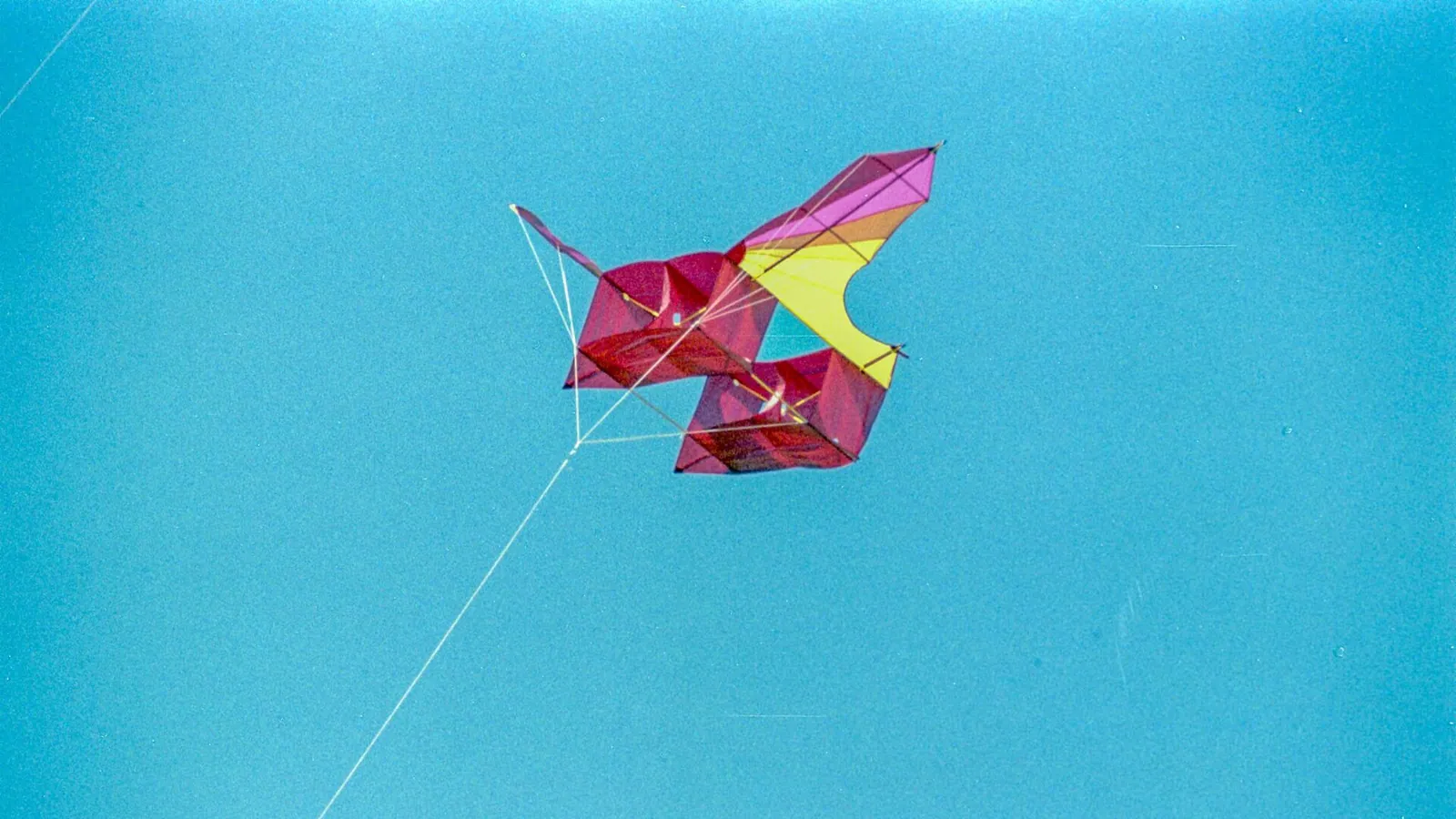
Short answer: The best wind to fly a kite is a gentle-to-moderate breeze, roughly 8–18 mph (7–16 knots, Beaufort Force 3–4). That’s strong enough to lift the kite and hold it steady, but gentle enough that the line won’t strain or the kite won’t dive. Below about 5 mph it’s usually too calm; above 25 mph it’s too strong for most family kites.
Flying a kite looks simple, and it is, once the wind cooperates. The trick most beginners miss is that there’s a fairly narrow band of wind that makes a good kite day. Too little and the kite flops to the ground. Too much and it dives, spins, or snaps the string. Below we map that band onto the Beaufort scale so you can read any forecast or wind app and know instantly: is today a kite day?
How much wind do you actually need to fly a kite?
Most recreational kites fly best in 8–18 mph of wind, which is a gentle-to-moderate breeze on the Beaufort scale (Force 3–4). At that speed, a flag flutters fully, small tree branches sway, and you can feel a steady push on your face. That steady push is exactly what holds a kite aloft.
Here’s a quick gut check that needs no equipment. If smoke drifts but flags hang limp, it’s probably too light. If a flag stands out straight and leaves are in constant motion, you’re in the zone. If your hat wants to fly off and small branches are whipping, it’s getting strong, and most kites will start to struggle.
A clear sky does not tell you whether there is enough wind for your kite. Check the recommended wind range on its packaging and the conditions in an open area before launching.
What does the Beaufort scale say about kite flying?
The Beaufort scale rates wind from Force 0 (calm) to Force 12 (hurricane), and kite flying lives almost entirely in Force 2 through Force 5. The original scale was developed in 1805 by Sir Francis Beaufort of the U.K. Royal Navy and is still used on marine and aviation forecasts worldwide, because describing wind as “a gentle breeze” tells you more than a bare number does.
We built the chart below specifically for recreational kite flyers, using the exact knot and mph ranges from our Beaufort to knots chart. It maps each force to what it means for a kite in your hands: too light, ideal, getting strong, or pack it up.
Notice the usable band is only about three Beaufort steps wide. That’s narrower than for most wind sports, which is why “the kite won’t fly” is such a common complaint. It’s usually not the kite. It’s that the wind was outside that band.
Wind speed chart for kite flying (Beaufort + knots + mph)
| Beaufort | Description | Knots | mph | What it means for a kite |
|---|---|---|---|---|
| 0 | Calm | <1 | <1 | Won’t fly. Air is dead still. |
| 1 | Light air | 1–3 | 1–3 | Too light for most kites; only specialist light-wind kites. |
| 2 | Light breeze | 4–6 | 4–7 | Marginal. Light delta and diamond kites can fly with effort. |
| 3 | Gentle breeze | 7–10 | 8–12 | Ideal for most kites. Easy launch, steady flight. |
| 4 | Moderate breeze | 11–16 | 13–18 | Ideal to lively. Great for sport and box kites; hold on. |
| 5 | Fresh breeze | 17–21 | 19–24 | Strong. Sturdy single-line kites only; lines strain. |
| 6 | Strong breeze | 22–27 | 25–31 | Too strong for most. Pack up family kites. |
| 7+ | Near gale and above | 28+ | 32+ | Stay home. Unsafe for recreational kites. |
Source: knot and mph ranges per the NWS Beaufort wind scale, matching our Beaufort to knots chart.
Forecast in knots but think in mph? Our knots to mph & km/h converter lists every wind speed side by side in all four units, so the chart above lines up with whatever your forecast shows.
Which kite suits which wind?
Flying a traction kite rather than a single-liner? The kite size calculator sizes power kites from your weight and the wind.
Kite design matters as much as wind speed, and matching the two is what separates a frustrating afternoon from a great one. Lightweight kites with large surface area fly in gentle wind; small, rigid kites need more push. Picking the wrong kite for the day is the second most common beginner mistake after picking a calm day.
A few rules of thumb we lean on:
- Light-wind kites (large delta, light diamond, parafoil): best in Force 2–3, around 4–12 mph. These are the rescue kites for a barely-breezy park.
- All-around family kites (standard diamond, delta, sled): happiest in Force 3–4, 8–18 mph. The everyday sweet spot.
- Sport and stunt kites (dual-line): Force 3–5, lively and responsive but demanding above 18 mph.
- Box and cellular kites: heavier, so they want Force 4–5, roughly 13–24 mph, to get up and stay up.
If you only own one kite, an all-around delta or diamond covers the widest range of normal days. It’s the kite we’d hand a first-timer every time.
Kite flyers aren’t the only ones watching a narrow wind band. If you also fly drones, the limits are even tighter; most consumer drones max out around Force 3–4. See our notes for drone pilots flying in wind limits.
Know the moment the wind is right. WindUp watches 10,000+ live wind stations and rings an alarm the second the wind at your spot enters your ideal kite range, even through Do Not Disturb. Set 8 mph as your minimum, 25 mph as your max, and head out when it fires. Get WindUp — the alarm is free.
How do you stay safe flying a kite?
Kite injuries are rare but real, and nearly all of them happen in strong or gusty wind, the upper half of Force 5 and above. The biggest risks are line cuts to bare hands, being dragged by a large kite, and flying near power lines. A gentle-to-moderate breeze keeps all three risks low, which is another reason the 8–18 mph band is the friendly one.
Our short safety list, especially with kids:
- Wear light gloves if you’re flying a powerful kite on a strong day. Spectra and Dyneema lines can slice skin.
- Keep well clear of power lines, roads, airports, and crowds. Wet or metallic lines conduct electricity.
- Watch the gusts, not just the average. A steady 15 mph with 30 mph gusts is a strong day, not a moderate one.
- If the kite starts diving hard or pulling you off balance, wind in and land it. That’s the wind telling you it’s too much.
Rhetorical question worth asking before every session: does the wind feel steady, or punchy? Steady is fun. Punchy and gusty is when things go wrong, even at a modest average speed.
How do you know the wind before you leave home?
The best way is to check a live wind reading near you, not a generic phone-weather icon. Forecasts give a guess for a wide area; a live wind station shows the actual speed at a real spot right now. That difference matters most for kite flying, where being two Beaufort steps off means the difference between a great day and a no-fly day.
The simplest workflow we use: pick your ideal range (8–18 mph for most kites), set it as a minimum and maximum on a live wind alarm, add a gust ceiling, and let the app tell you when it’s on. No more driving to the park to find dead air. If you don’t have one, a free live wind app handles this in about a minute of setup.
FAQ
The questions we hear most from families and hobby flyers: the ideal wind is a gentle-to-moderate breeze (8–18 mph), a dead-calm day is the hardest day to fly, and matching your kite to the wind matters as much as the wind itself. Full answers above and below.
Still picking your spot or your gear? Start with the Beaufort scale chart to read any forecast at a glance, then download WindUp free to get an alarm when your local wind hits the kite-flying range.