


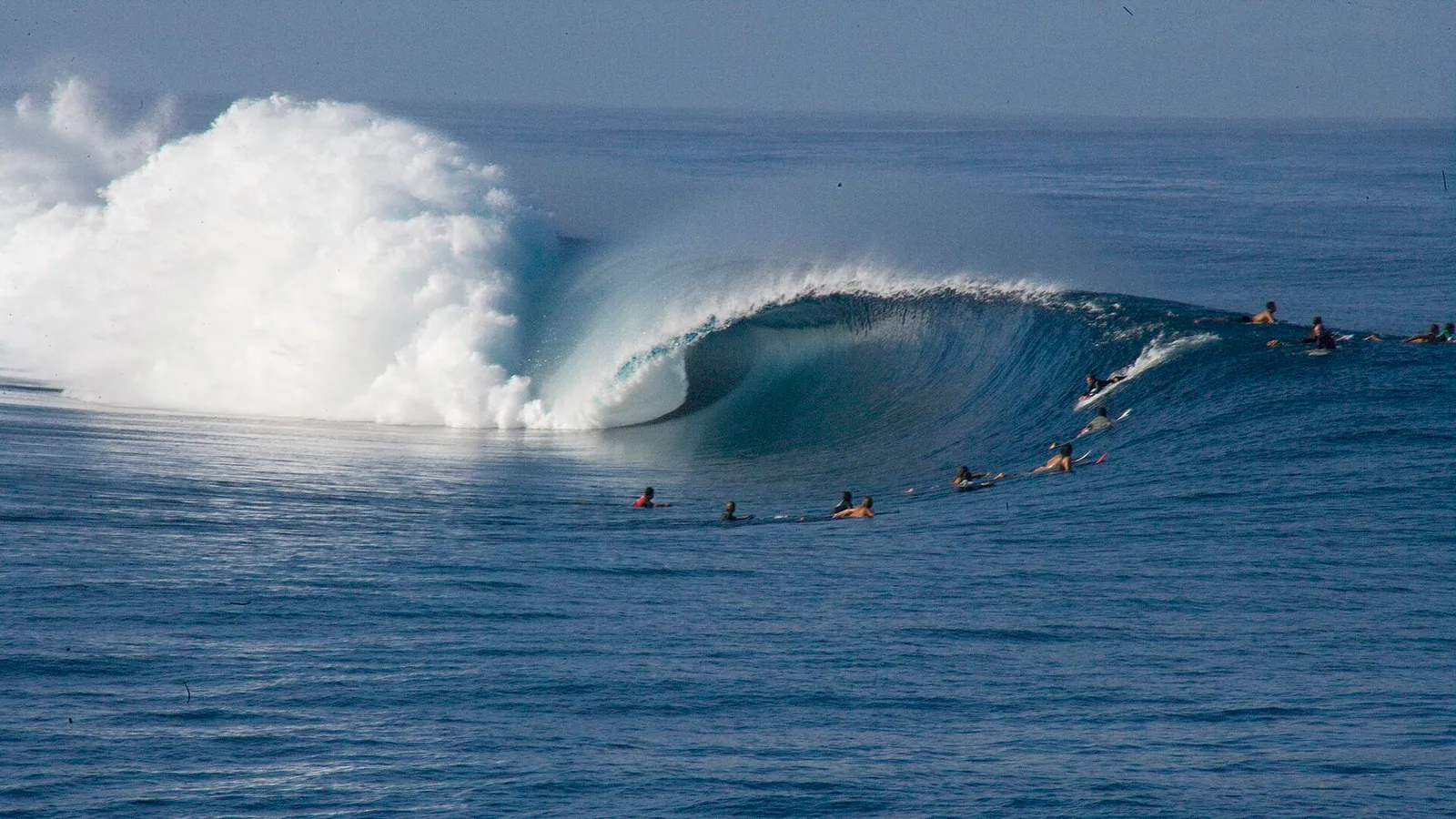
TL;DR: The best wind for surfing is light offshore (5–15 kt) or no wind at all. Onshore starts hurting around 8 kt and has most breaks looking like a washing machine by 15. Strong offshore past ~20 kt is its own problem — hard paddle-ins and spray-blinded takeoffs. Surfing is the sport where you set a wind alarm backwards: you want to know when the wind leaves.
Every other wind sport on this site is trying to catch wind. Surfing is trying to dodge it. The swell that makes your wave was born from wind — usually a storm a thousand miles away — but the wind blowing at your beach right now mostly decides whether that swell arrives as an open face or as mush. Here’s how to read it, in knots. (Think in mph or km/h? Keep the conversion chart handy.)
Quick reference: wind vs. wave quality
| Local wind | What the wave does | Verdict |
|---|---|---|
| 0–3 kt (glass) | Surface like oil, faces clean and easy to read | Go. Now. |
| Offshore 5–15 kt | Groomed faces, wave holds open longer, spray off the lip | The postcard. Go. |
| Onshore 4–8 kt | Slight texture, still fun, fewer people whining | Very surfable |
| Onshore 8–15 kt | Crumbly, sectioned, windswell chop on top | Only if you’re desperate |
| Onshore 15+ kt | Victory-at-sea. Faces collapse before they form | Kite or windsurf instead |
| Offshore 15–20+ kt | Hard to paddle in, blinding spray, boards go flying | Looks epic, surfs hard |
The two numbers that matter: 8 knots onshore (where quality starts dying) and ~15–20 knots offshore (where grooming turns into a fight).
Why offshore grooms and onshore wrecks
Wind doesn’t change the swell — it changes the last thirty metres of the wave’s life.
Offshore wind blows against the wave’s direction of travel. It presses the face flat and smooth, slows the lip from pitching, and holds the wave open a beat longer before it breaks. That’s why offshore mornings produce those photos where spray feathers backwards off the crest. It also gives you more time in the pocket, which is why the same swell feels a foot better on an offshore day.
Onshore wind travels with the wave and shoves it from behind. The lip gets pushed over early, sections crumble before you reach them, and on top of the real swell you get short-period wind chop stacked at random. Past about 12–15 knots onshore, most spots stop producing surfable faces at all and start producing foam.
Cross-shore sits in between — it puts texture and warble on the face without fully collapsing it. A weak cross-offshore is fine; a strong cross-onshore is onshore with extra steps.
The glass window (or: why dawn patrol exists)
Land heats and cools faster than the sea. During the day the warm land pulls air in from the water — the onshore sea breeze that kills afternoon sessions on most coasts. Overnight the land cools, that engine shuts off, and often reverses into a gentle land breeze: offshore, right around first light.
That’s the entire physics of dawn patrol. But the window is movable:
- A cloudy morning delays the land heating — glass can hold until noon.
- A scorching day fires the sea breeze early — clean conditions can be gone by 8 a.m.
- A synoptic wind (a real weather system, not the daily thermal) can blow onshore at 6 a.m. or offshore at 4 p.m. and ignore the schedule completely.
Which is why the 5:45 a.m. alarm-clock gamble so often ends with you staring at chop. The forecast models are decent at the synoptic wind and famously rough on the exact timing of the daily switch — the only thing that knows when your beach actually went clean is a wind station standing on it.
Reading a live station like a surfer
Three habits, all backwards from how the wind sports read the same numbers:
- Watch the average fall, not rise. Your trigger is the wind dropping under ~8 kt, or swinging into the offshore quadrant for your break.
- Use the gust spread as a texture report. A 6-kt average gusting 14 still puts warble on the face. Average and gust within a couple of knots of each other = clean surface.
- Direction beats speed. 12 kt offshore surfs better than 6 kt onshore at most breaks. Know your break’s offshore quadrant (roughly, the compass bearing of the land behind you) and judge every reading against it.
Set the alarm backwards
This is exactly what the surfing setup in WindUp does: instead of “ring me when the wind hits 18 knots,” you set a maximum — say 8 knots — with a direction filter for your break’s offshore quadrant, and the alarm means it just went clean. It watches the station while you work, and it rings through silent mode, because the glass window doesn’t care about your meeting schedule either.
The Beaufort scale in knots is worth internalising too: for surfing, everything you want lives in Beaufort 0–3, and Beaufort 4 onshore is the polite name for ruined.
One honest caveat: no wind alarm reads swell. Flat ocean plus glassy wind is still a flat ocean — pair your wind alert with your favourite surf forecast for the swell side, and let the station tell you the day-of truth about the surface. If your usual conditions check is a windsurfing habit, the windsurfing wind guide covers the same coast from the opposite direction: the days that wreck your session are the days that make theirs.