


TL;DR: The Beaufort scale converts wind speed (in knots, mph, m/s) into something you can actually feel and predict. Force 0 is calm, Force 12 is hurricane. Most wind sports happen in Force 3–7. Bookmark this page — the conversion table at the bottom is the cleanest one online.
Need one specific number converted right now? The interactive wind speed converter does knots ⇄ mph ⇄ km/h ⇄ m/s instantly, with the Beaufort force alongside.
The Beaufort scale has been used by sailors, pilots, paragliders, and outdoor types since 1805. It’s still on every marine forecast, in every aviation textbook, and on the WindUp app’s settings screen — because telling someone “Force 5” describes both the speed and the experience. Here’s how to read it.
How the Beaufort scale works
Each Beaufort number (0–12) maps to a wind speed range and describes:
- What the sea looks like
- What land effects you’ll see (smoke, trees, structures)
- What’s safe to do outdoors
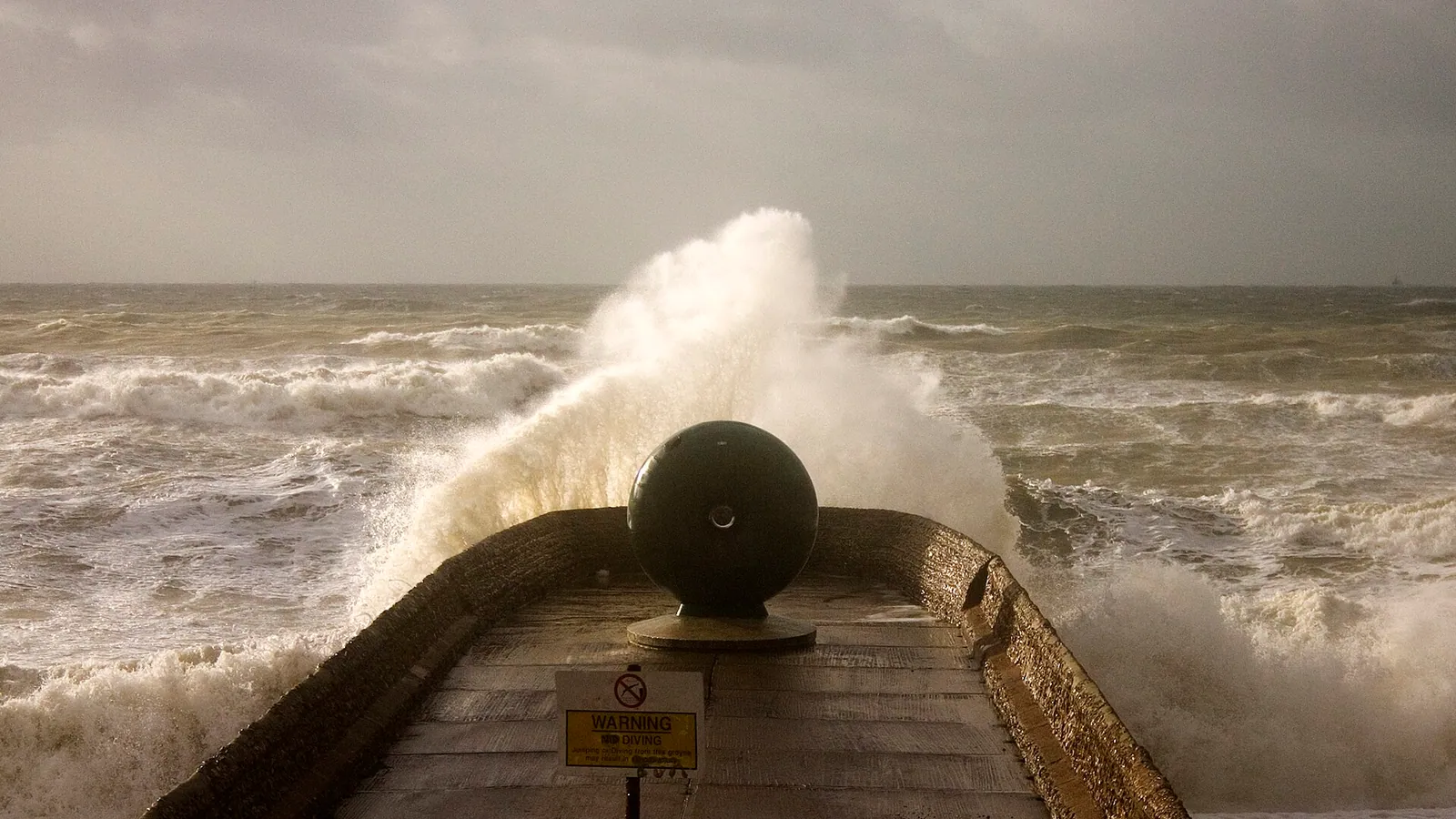
Force 0 is glassy water. Force 12 is hurricane — the wind has uprooted trees, blown off roofs, made the sea white with foam. You probably won’t ride a Force 12. Most riders live in Force 3 to Force 7.
The complete Beaufort scale (with all conversions)
| Force | Description | Knots | mph | m/s | km/h | Sea state | Land observations |
|---|---|---|---|---|---|---|---|
| 0 | Calm | <1 | <1 | <0.3 | <2 | Mirror-flat | Smoke rises straight up |
| 1 | Light air | 1–3 | 1–3 | 0.3–1.5 | 2–5 | Ripples without crests | Smoke drifts |
| 2 | Light breeze | 4–6 | 4–7 | 1.6–3.3 | 6–11 | Small wavelets | Leaves rustle |
| 3 | Gentle breeze | 7–10 | 8–12 | 3.4–5.4 | 12–19 | Large wavelets | Leaves and twigs in motion |
| 4 | Moderate breeze | 11–16 | 13–18 | 5.5–7.9 | 20–28 | Small waves, frequent whitecaps | Small branches move, dust raised |
| 5 | Fresh breeze | 17–21 | 19–24 | 8.0–10.7 | 29–38 | Moderate waves, many whitecaps | Small trees sway |
| 6 | Strong breeze | 22–27 | 25–31 | 10.8–13.8 | 39–49 | Large waves, foam crests | Large branches move |
| 7 | Near gale | 28–33 | 32–38 | 13.9–17.1 | 50–61 | Sea heaps up, foam streaks | Whole trees in motion |
| 8 | Gale | 34–40 | 39–46 | 17.2–20.7 | 62–74 | High waves with breaking crests | Twigs break off trees |
| 9 | Strong gale | 41–47 | 47–54 | 20.8–24.4 | 75–88 | High waves, dense foam | Slight structural damage |
| 10 | Storm | 48–55 | 55–63 | 24.5–28.4 | 89–102 | Very high waves | Trees uprooted |
| 11 | Violent storm | 56–63 | 64–72 | 28.5–32.6 | 103–117 | Exceptionally high waves | Widespread damage |
| 12 | Hurricane | ≥64 | ≥73 | ≥32.7 | ≥118 | Air filled with foam | Devastation |
Source: WMO standard ranges. The unit conversions are exact NIST values — 1 knot is one nautical mile (1,852 m) per hour. Most wind apps including WindUp let you set thresholds in any of these units.
Beaufort by sport — the bands you actually care about
| Sport | Sweet spot | Notes |
|---|---|---|
| Kitesurfing | F4–F6 (11–27 kt) | F5 is the all-around. F6+ needs small kites and skill. |
| Windsurfing | F4–F8 (11–40 kt) | Sail size adapts; pros plane all the way to F7. |
| Wing foiling | F4–F5 (11–21 kt) | Tight band — F3 is too light, F6 is too brutal. |
| Sailing dinghy | F3–F5 (7–21 kt) | Reef or depower above F5. |
| Sailing keelboat | F3–F6 (7–27 kt) | First reef at F5–F6. |
| Paragliding | F2–F4 (4–18 kt) | F4 is the upper safety limit; gust ceiling matters more than average. |
| Drone flight (consumer) | F3 max (≤10 kt) | Most consumer drones rated 8–12 m/s = F4 ceiling. |
How to use Beaufort with a live wind alarm
The point of Beaufort isn’t to memorize numbers — it’s to be able to translate “how does it feel out there?” into “is it on?”. The trick:
- Pick the Beaufort force you want for your sport.
- Translate to knots (table above).
- Set those knots as your minimum and maximum on a live wind alarm.
- Add a gust ceiling 5 kt above your max — gusty days hurt.
- Filter by direction so offshore days don’t false-alarm.
- Stop checking. Wait for the alarm.
That’s the entire workflow. If you don’t already have a live-alarm app, WindUp is free and does exactly this. Or read WindUp vs Windy if you’re picking.
Why this beats checking forecasts
Forecasts give you a guess. Beaufort forces describe what’s actually happening. A Force 5 fresh breeze with whitecaps is unmistakable — your phone doesn’t have to tell you, the sea will. The point of the alarm is to skip the checking, so you don’t miss the moment Force 5 arrives.
FAQ
The questions we get most about Beaufort: it’s still relevant, it works in any unit, and it’s faster than memorizing knot ranges per sport. Bookmark the table and forget the rest.