

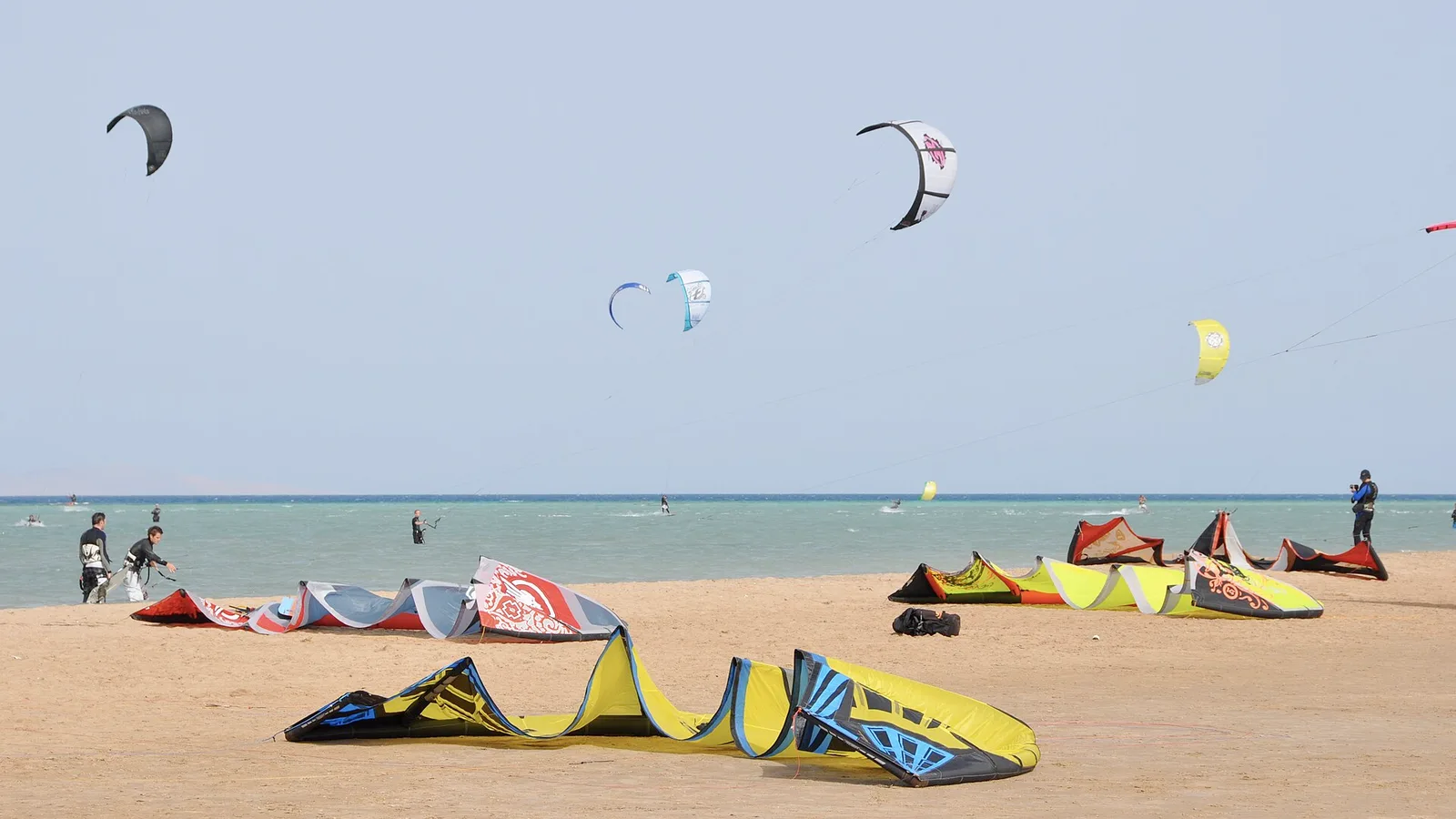
TL;DR: El Gouna is Egypt’s flat-water showroom: the Hurghada thermal, minus the chop, plus lagoons you can stand in. Mangroovy is the launch-and-learn main beach, Zeytouna is waist-deep butter behind an island sandbar, and Tawila is the boat-day sandbar you’ll post photos of. Peak season May–September, boardshorts water, and the flattest progression water you’ll find on the Red Sea.
If Hurghada is Egypt’s kite factory, El Gouna — 25 km up the coast — is the showroom. Same wind engine, same season, but the town itself is a purpose-built lagoon resort: canals instead of traffic, sandbars instead of shore-dump chop, and an infrastructure that makes kite trips embarrassingly easy. Kitesurfing in El Gouna is the version of Egypt you recommend to your girlfriend, your parents, and anyone learning.
Here’s the spot-by-spot, the wind by month, and how to actually time the thermal.
Why El Gouna works
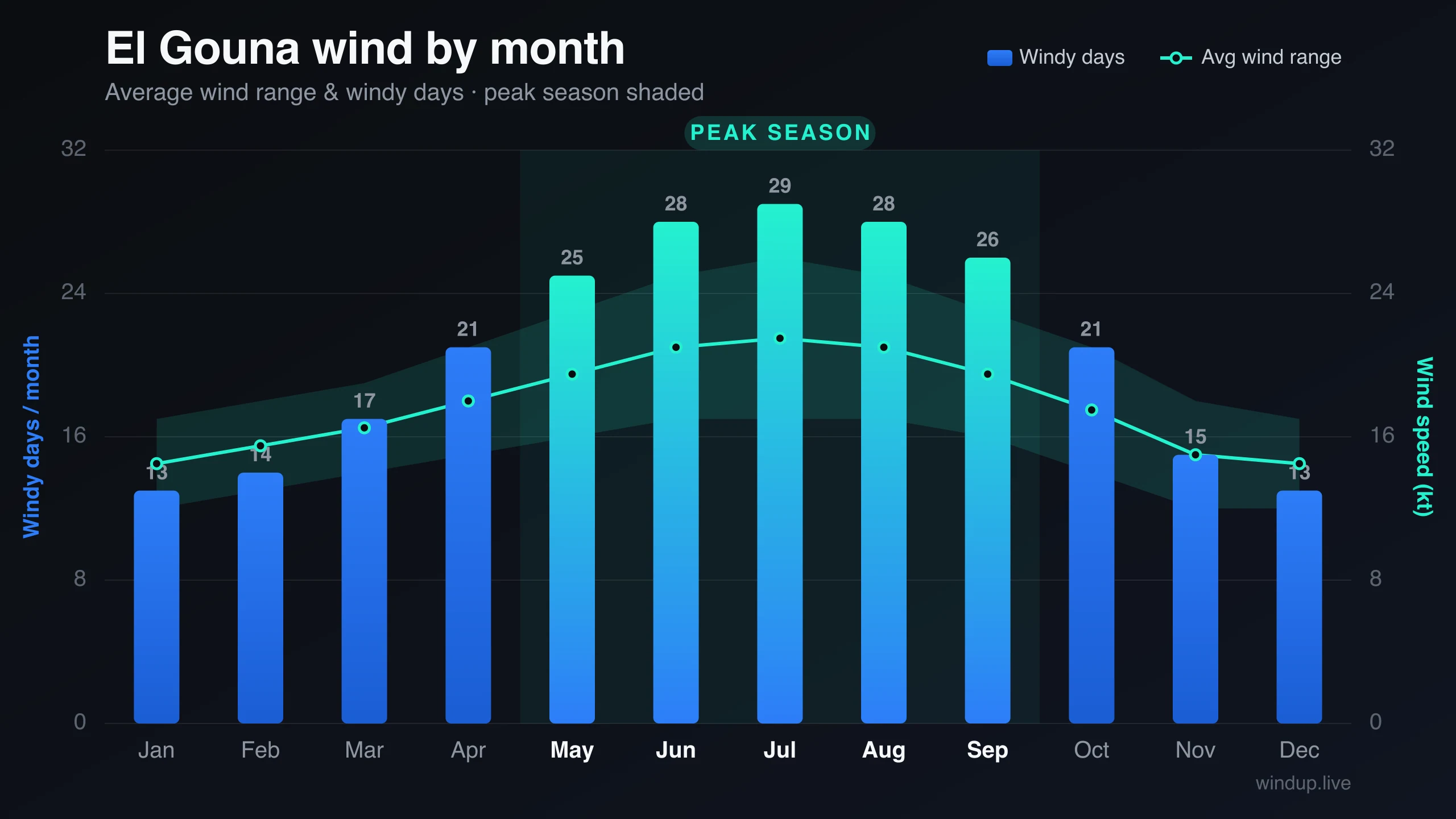
The wind is the same Red Sea NNW thermal that makes the whole Hurghada coast famous: desert heats, air rises, the sea breeze accelerates down the coast — nearly every afternoon, April through October. What El Gouna adds is bathymetry: a coastline of islands, sandbars and shallow lagoons that iron the sea flat while the wind stays honest.
The result is a rare combination — Hurghada-grade wind statistics over water with almost no state, which is exactly what progression (and freestyle) wants.
| Month | Avg wind (kt) | Windy days/month | Water temp | Notes |
|---|---|---|---|---|
| Jan | 12–17 | 13 | 22°C | Shorty or 3/2, 12 m weather |
| Feb | 13–18 | 14 | 22°C | Light but rideable |
| Mar | 14–19 | 17 | 23°C | Warming up |
| Apr | 15–21 | 21 | 24°C | Season opens |
| May | 16–23 | 25 | 26°C | Reliable |
| Jun | 17–25 | 28 | 27°C | Peak |
| Jul | 17–26 | 29 | 28°C | Peak |
| Aug | 17–25 | 28 | 29°C | Peak — warmest water |
| Sep | 16–23 | 26 | 28°C | Peak, thinner crowds |
| Oct | 14–21 | 21 | 27°C | Last reliable month |
| Nov | 12–18 | 15 | 25°C | Foil / big kite |
| Dec | 12–17 | 13 | 23°C | Quietest |
The El Gouna kite spots
1. Mangroovy Beach — the main stage
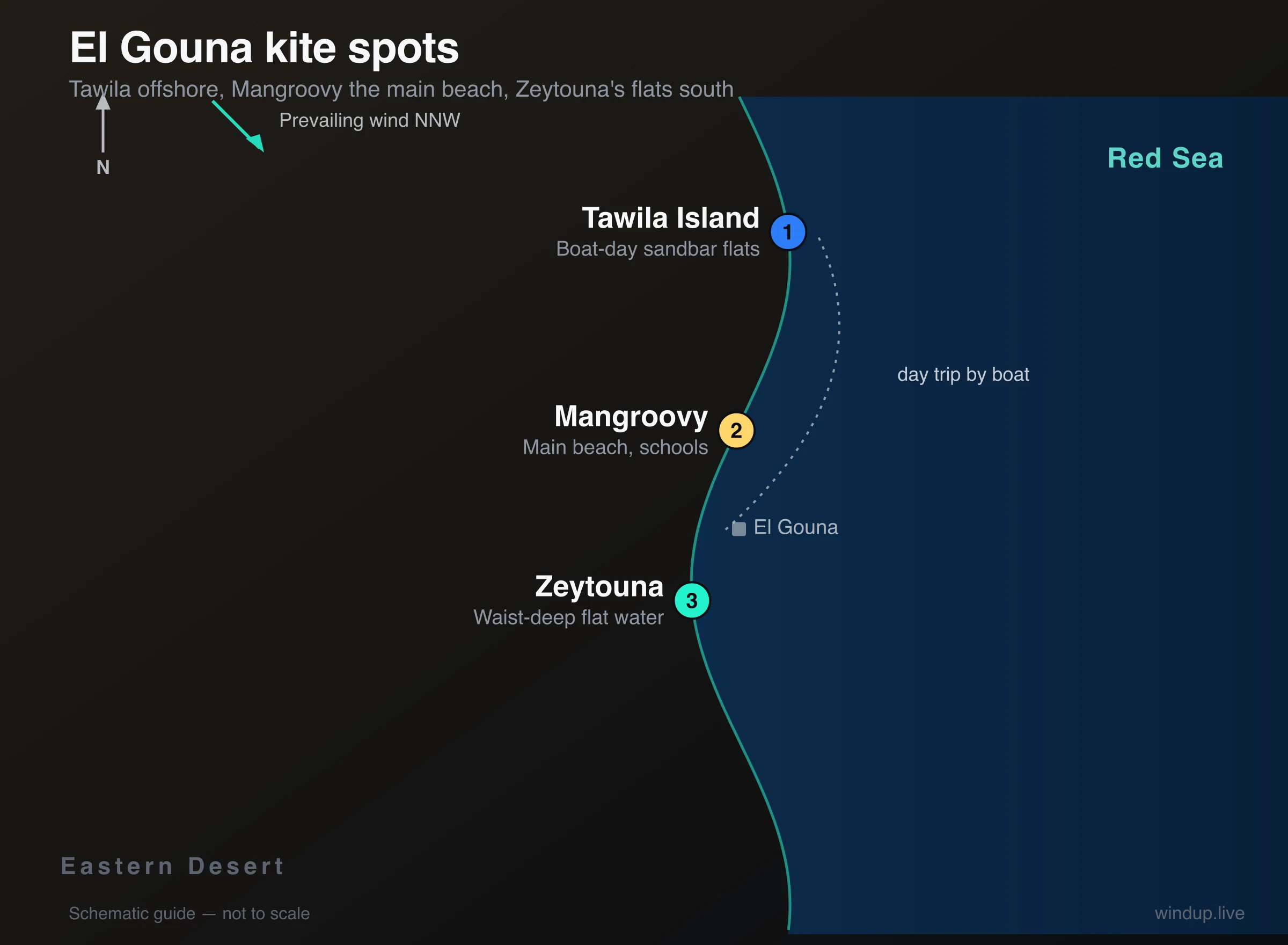
The heart of El Gouna kitesurfing: a long sandy launch lined with kite centres, rescue boats on standby and a riding area that splits neatly by skill — waist-deep inside section for learners, open water with small chop outside for everyone else. Wind is side-onshore and clean. If you take lessons in El Gouna, they almost certainly happen here; if you’re independent, you’ll still use it as your daily default because rigging, parking and coffee are all thirty metres apart.
2. Zeytouna Beach — the flat-water postcard
South of Mangroovy, sheltered behind an island sandbar, Zeytouna is the shot you’ve seen on every Egypt kite ad: turquoise, waist-deep, mirror-flat when the sandbar does its job. It’s a small pay-to-enter beach club rather than a big open launch, which keeps numbers civilised. This is the spot for unhooked practice, first jumps, and convincing yourself you’ve improved — the water gives you nothing to blame.
3. Tawila Island — the boat day
A low sand island in open water north of El Gouna, ringed by sandbars that turn the sea into an enormous flat-water playground with nothing to hit and nobody to dodge. Kite centres run day trips in season — you rig on the boat or the sand, ride until your legs give out, and motor home. Do it once you can stay upwind reliably; it’s the best riding day in the area, but it’s open water with boat-only logistics, not a learner venue.
Which spot, which day?
- Learning or coaching: Mangroovy, every time — rescue cover, standing depth, structure.
- Freestyle or filming: Zeytouna when the wind is in its normal NNW slot; the sandbar needs the standard direction to groom properly.
- The special day: Tawila boat trip when the forecast is locked mid-range and you want space.
- Nuking (25+): Mangroovy’s outside section — Zeytouna gets crowded-small when everyone’s overpowered.
El Gouna vs Hurghada — which one?
Twenty-five kilometres apart, same wind, honestly different products. Hurghada is bigger, cheaper, a real working city with more raw spots and a bit more wind on the stats. El Gouna is flatter, prettier, safer-feeling and frictionless — and you pay resort prices for it. Learners, families and flat-water addicts: El Gouna. Budget big-air crews: Hurghada. Two-centre trips are trivially easy (a 40-minute taxi), which is why our Hurghada guide calls this coast one destination with two personalities. For the third Egyptian flavour — mountains, boat-access lagoons and a moodier vibe — see Dahab.
What to ride
The standard Egypt quiver: a 9 m and a 12 m covers an 80 kg rider from June scale-topping days to October’s softer afternoons. Lighter or heavier, shift one size. Twin-tip is the default; bring the foil for November–March and you’ll double your rideable days. No wetsuit May–October; a shorty for the winter mornings. (Dial your exact numbers with our wind-by-weight guide.)
How to time the thermal
El Gouna’s thermal is polite but not punctual: most peak-season days build late morning, lock in 16–24 kt by 1–3 p.m., and fade with the sun. The failure mode is the same as everywhere on this coast — you plan lunch around a forecast, the thermal runs 90 minutes early or late, and you either miss the window or stand around holding a pump.
The fix is the same one we push in every guide: watch the measurement, not the prediction. Set a live wind alarm for your range — say 16–26 kt with a gust ceiling — and let the station on the water tell you when it’s actually on. WindUp rings through Do Not Disturb, which matters more than it sounds when “waiting for wind” means napping by the pool. The alarm is free; the sessions you stop missing are the point.
Final word
El Gouna is the easiest good decision in kite travel: world-class wind reliability, the flattest water on the Red Sea, and logistics so smooth they’re almost suspicious. It won’t give you Cape Town adrenaline or Dahab soul — it gives you hours on flat water, which is what progression is actually made of.