


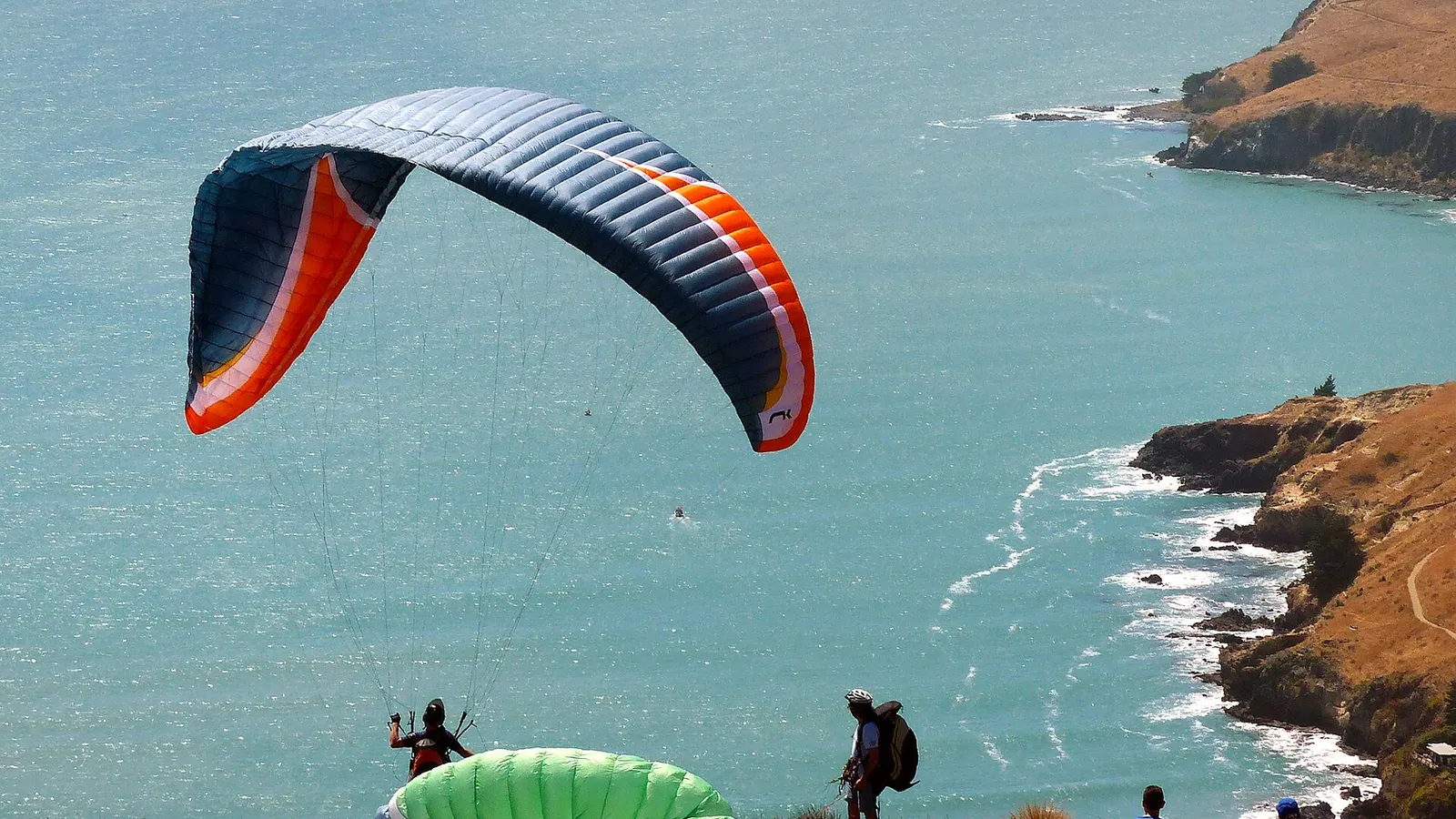
TL;DR: Most recreational pilots treat 15 knots steady at launch as the upper ceiling, with a smooth 6–12 kt as the soaring sweet spot and 4–9 kt ideal for beginners. But the average is only half the story — gusts and direction decide whether it’s actually safe. This is a guide, not a green light: your wing, your site, your skill and your instructor make the call.
Safety first. Paragliding is a risk sport where wind misjudgement causes serious accidents. Nothing below replaces proper instruction, a site briefing, or your own judgement. Always fly within your rating, follow local site rules, and when in doubt — don’t.
Wind speed for paragliding is the single most important go/no-go variable, and unlike kitesurfing or sailing, getting it wrong doesn’t just ruin your session — it gets people hurt. The tricky part is that “how much wind” is the wrong question. The right questions are how much, how gusty, and from where. Here’s how experienced pilots read all three.
Quick reference (recreational pilots)
Forecast in m/s or km/h instead of knots? Run it through the free wind speed converter first — paragliding limits are unforgiving enough without unit confusion.
| Condition | Steady wind at launch | Notes |
|---|---|---|
| Beginner-friendly | 4–9 kt | Clean launches, gentle air. Forward or light reverse. |
| Ideal soaring | 6–12 kt | Smooth lift, wing stays pressurised. |
| Experienced only | 12–15 kt | Strong; needs solid reverse-launch & penetration. |
| Upper ceiling | ~15 kt | Most recreational pilots stop here. |
| No-fly for most | 15 kt+ steady, or gusty | Penetration and collapse risk climb sharply. |
These figures are steady wind measured at launch height, for typical recreational wings. Mini-wings, speedwings and acro setups change the math entirely. Your site guide and instructor override this table, always.
Why the upper limit is around 15 knots
A paraglider only moves forward at roughly 20–25 knots of airspeed (a knot is one nautical mile per hour, about 1.15 mph or 1.852 km/h). If the wind is blowing 15 kt at you, you’ve got very little margin to penetrate — to actually make headway against it. Push past your wing’s speed and you can end up going backwards, blown behind the hill into rotor and turbulence. That’s why the ceiling sits well below what a kitesurfer would consider a good day: a kite pulls with the wind; a paraglider has to fly through it.
Gusts matter more than the average — here’s why
A paraglider is a soft wing held in shape by air pressure. A sudden drop in wind can deflate the leading edge and cause a collapse; a sudden surge can pitch the wing or pluck you off launch before you’re ready.
So the gust factor is the real safety number:
- Steady 12 kt, gusting 14 kt — smooth, often lovely.
- Average 10 kt, gusting 22 kt — more dangerous than the steadier 12 kt day, despite the lower average.
Rule of thumb: if gusts run more than about 1.5× the average, or 8+ knots over it, the air is too active. Active air means active wing — not where you want to be on a soft wing near terrain.
Direction is the third variable
Wind speed and gust factor mean nothing if the wind is on the wrong bearing. Most flying sites work within a narrow window — say W to NW. Wind even 30° off can mean:
- Cross or rotor on launch — turbulent, dangerous inflation.
- A lee-side launch — the worst-case scenario, with rotor right where you take off.
Always confirm the wind is on the site’s working bearing before you commit. A perfect 10 kt from the wrong direction is a no-fly.
Read the live wind, not just the forecast
Forecasts give you the plan; they don’t give you the moment. Thermal cycles, sea breezes and valley winds can swing a site from glassy to overpowered inside an hour. The pilots who fly the most are the ones watching the live station at or near launch, not the 6-hourly model.
A workflow that works:
- Day before: check the forecast trend and the synoptic picture. Is the pressure gradient gentle? Are thermals overdeveloping?
- Morning of: watch the live reading at your launch or the nearest representative station.
- Set an alert for your safe band — min and max wind, a gust ceiling, and the site’s working direction — so you know when it’s worth driving up without staring at your phone.
WindUp does exactly this: set your safe min/max, a gust ceiling and a direction filter, and it alerts you the moment the site is in range — even on Do Not Disturb. To be clear about what it is and isn’t: it tells you when conditions are worth a look. The go/no-go decision at launch is always yours, your instructor’s, and your site’s. See the paragliding setup page for suggested thresholds.
Putting it together: a simple go/no-go checklist
Before you commit to launch, the wind has to clear all three gates:
- Speed — steady wind within your wing’s and your skill’s safe band (most recreational pilots: ≤15 kt).
- Gusts — gust factor under ~1.5× the average; no big surges.
- Direction — on the site’s working bearing, no lee-side or cross component.
Fail any one of the three and it’s a no-fly — even if the other two are perfect. A beautiful 10 kt average means nothing if it’s gusting to 24 or blowing cross.
The honest bottom line
The “right” wind speed for paragliding is a band, not a number, and it’s bounded much lower than other wind sports because you have to fly through the wind, on a soft wing, near terrain. Learn your site, respect the gust factor, confirm the direction, and let a live alarm tell you when it’s worth heading up — but never let any app, this one included, make the launch decision for you. When in doubt, don’t.
FAQ
Common questions about safe wind speed for paragliding answered above and below. The meta-answer: it’s never just the average — it’s speed and gust and direction, judged at launch by you and your instructor.